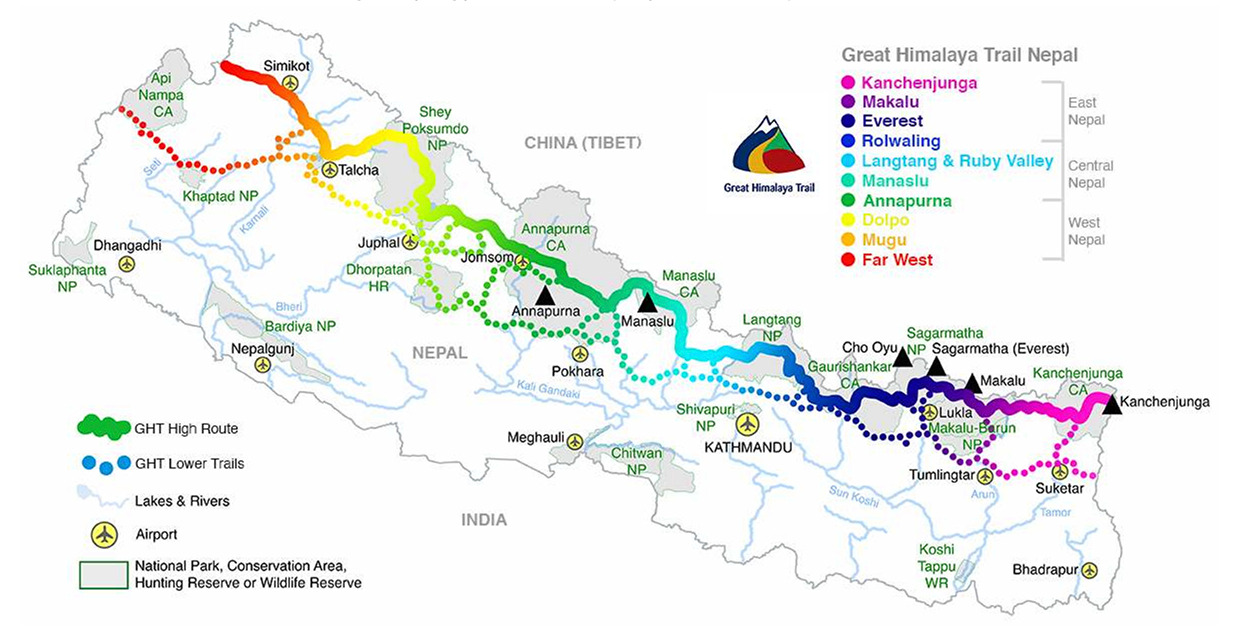
The Great Himalaya Trail (GHT) crosses Nepal from Kanchenjunga in the east to Humla in the far west, passing through the most remote and spectacular Himalayan regions. This itinerary is a full traverse and can also be customized based on how you’d like to travel.
Section 1
Kanchenjunga Region (East Nepal)
Duration: 20–24 Days
Maximum Elevation: 5,143m (Sele La Pass)
The journey begins in the remote Kanchenjunga region, home to the world’s third-highest mountain. This section offers pristine landscapes, rhododendron forests, and traditional Rai and Limbu villages.
Highlights:
- Kanchenjunga Base Camp (North & South)
- Remote villages and untouched trails
- High passes: Sele La, Sinion La
Section 2
Makalu–Barun Region
Duration: 22–26 Days
Maximum Elevation: 5,000m+
This section leads into the wild and less-traveled Makalu–Barun National Park, known for its deep valleys, glaciers, and rich biodiversity.
Highlights:
- Makalu Base Camp
- Barun Valley wilderness
- Dramatic alpine scenery
Section 3
Everest Region
Duration: 18–22 Days
Maximum Elevation: 5,535m (Renjo La Pass)
Entering the legendary Everest region, trekkers experience Sherpa culture and breathtaking views of the world’s highest peak.
Highlights:
- Everest Base Camp
- Gokyo Lakes
- High passes: Renjo La, Cho La, Kongma La
- Monasteries and Sherpa heritage
Section 4
Rolwaling & Langtang Region
Duration: 18–22 Days
Maximum Elevation: 5,720m (Tashi Lapcha Pass)
A challenging and technical section connecting Everest with central Nepal through remote alpine terrain.
Highlights:
- Rolwaling Valley
- Tashi Lapcha Pass
- Glaciers and high alpine landscapes
Section 5
Manaslu & Annapurna Region
Duration: 20–25 Days
Maximum Elevation: 5,160m (Larkya La Pass)
This section blends cultural richness with classic Himalayan trekking routes.
Highlights:
- Manaslu Circuit
- Larkya La Pass
- Annapurna Circuit
- Diverse ethnic villages and landscapes
Section 6
Dolpo Region
Duration: 24–28 Days
Maximum Elevation: 5,190m (Kang La Pass)
One of Nepal’s most mystical regions, Dolpo remains deeply influenced by Tibetan culture and traditions.
Highlights:
- Shey Phoksundo Lake
- Ancient monasteries
- Remote high passes
- Isolated Tibetan villages
Section 7
Humla & Far West Nepal
Duration: 18–22 Days
Maximum Elevation: 4,900m+
The final section concludes in the remote Humla region, near the Tibetan border.
Highlights:
- Simikot
- Mount Kailash trade routes
- Traditional Tibetan lifestyle
- Wild and untouched landscapes
Our GHT Approach
At ICE 8000, we offer:
- Carefully planned GHT sections or full crossings
- Experienced, government-licensed guides with high-altitude expertise
- Strong focus on safety, acclimatization, and logistics
- Customized itineraries based on fitness, time, and objectives
- Ethical trekking practices supporting local communities
Whether you choose a sectional trek or a complete Great Himalaya Trail expedition, we ensure professional execution and genuine Himalayan immersion.
Who is the Great Himalaya Trail for?
The GHT is ideal for:
- Experienced trekkers and mountaineering enthusiasts
- Adventure travelers seeking remote and less-crowded routes
- Explorers interested in culture, geography, and endurance trekking
- Those looking for a once-in-a-lifetime Himalayan challenge
Prior high-altitude trekking experience is strongly recommended.
Why trek with ICE 8000?
- Deep local knowledge of Nepal’s high Himalayas
- Strong logistical network across remote regions
- Commitment to safety, sustainability, and professionalism
- Personalized service and transparent planning