Day 1
Arrival & Transfer to Hotel
Upon arrival in Kathmandu, you will be welcomed by our team and transferred to your hotel. The rest of the day is free to rest and recover from international travel.
Day 2
Expedition Preparation
This day is dedicated to expedition preparation, including equipment checks, packing, and last-minute purchases. You will meet the expedition leader and support staff to review logistics and plans.
Day 3
Briefing at the Ministry of Tourism
Today you attend the mandatory briefing at the Ministry of Tourism. All permits and official documentation are finalized, ensuring compliance with government regulations for the expedition.
Day 4
Drive to Beni & Darbang – Camping
An early morning drive takes you from Kathmandu to Beni and onward to Darbang. The journey passes through scenic hills and river valleys. Overnight camping at Darbang.
Day 5
Darbang to Baskot Village – Camping
The trek begins through terraced fields and traditional villages as you hike from Darbang to Baskot. Experience local culture and rural Himalayan life. Overnight camping.
Day 6
Baskot Village to Bagar – Camping
Continuing through forested trails and river crossings, the route leads to Bagar. The landscape gradually becomes more rugged as you move deeper into the Dhaulagiri region. Overnight camping.
Day 7
Bagar to Dovan – Camping
Today’s trek follows narrow gorges and riverside paths to Dovan. The environment becomes increasingly remote and wild. Overnight camping.
Day 8
Dovan to Pina (Forest Camp – Sallaghari) – Camping
The trail ascends through dense forests to Pina, also known as Sallaghari. This forest camp offers a quiet and isolated setting ideal for acclimatization. Overnight camping.
Day 9
Pina (Forest Camp) to Italian Base Camp – Camping
Leaving the forests behind, the trek opens into alpine terrain as you head toward the Italian Base Camp. Stunning views of surrounding peaks begin to dominate the landscape. Overnight camping.
Day 10
Italian Base Camp to Dhaulagiri Base Camp (4,740 m) – Camping
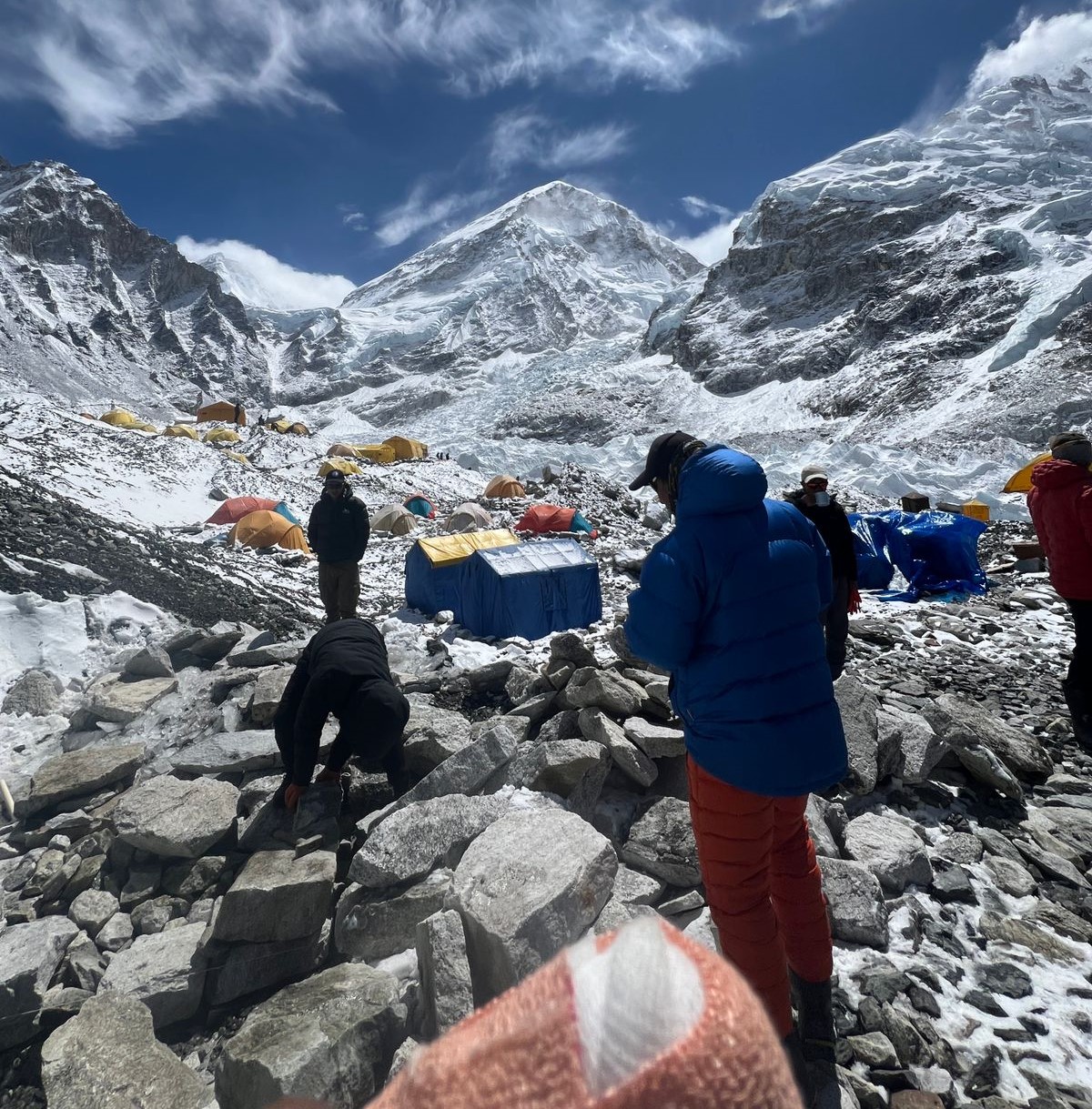
A challenging trek takes you to Dhaulagiri Base Camp, situated beneath the massive north face of Dhaulagiri. Upon arrival, the team establishes camp and prepares for the climbing phase.
Day 11 - 39
Climbing Period
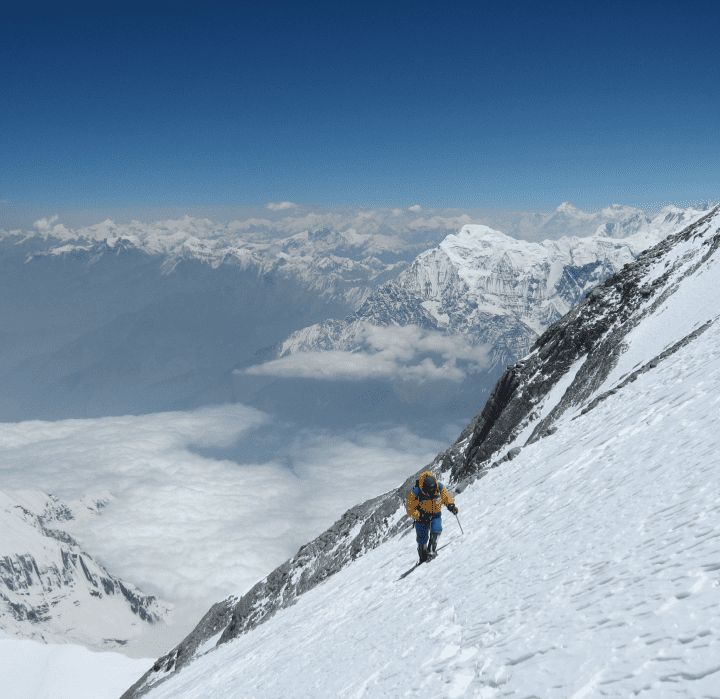
This extended period is dedicated to acclimatization rotations, establishing higher camps, fixing ropes, and waiting for favorable weather windows. Climbers make multiple ascents and descents between camps before attempting the summit of Dhaulagiri (8,167 m) when conditions permit.
Day 40
Preparation for Return to Kathmandu
After completing the climbing phase, preparations are made for descent and return. Camps are organized and equipment packed for the journey back.
Day 41
Dhaulagiri Base Camp to Yak Kharka – Camping
The descent begins as you trek from Base Camp to Yak Kharka, gradually losing altitude and re-entering greener terrain. Overnight camping.
Day 42
Yak Kharka to Marpha & Jomsom – Hotel
Continue descending through alpine valleys to Marpha, famous for its apple orchards, and onward to Jomsom. Overnight stay in a hotel.
Day 43
Fly to Pokhara & Kathmandu
A scenic flight takes you from Jomsom to Pokhara, followed by a connecting flight or drive to Kathmandu. Transfer to your hotel upon arrival.
Day 44
Kathmandu (Free Day)
A leisure day in Kathmandu for rest, shopping, or optional sightseeing. A farewell dinner may be arranged to celebrate the completion of the expedition.
Day 45
Final Departure
After breakfast, you will be transferred to the international airport for your onward journey, marking the end of the Dhaulagiri Expedition.
INCLUDES
- Airport-Hotel-Airport transport
- Half day sightseeing in Kathmandu
- 4 nights hotel accommodation in Kathmandu on BB basis
- Domestic flights
- Excess baggage charges
- Climbing permit fees
- Porters and Yaks for loads to & from Basecamp
- Equipment allowance and insurance for Liaison officer
- Personal climbing Sherpa with wages/equipment allowance/ insurance/high-camp load ferry bonus
- Cook and cook boys with equipment allowance, wages and insurance
- Basecamp tents and mattresses
- Dining, Kitchen and Shower tents and other camping equipment
- Fresh and organic food and beverages at Base Camp and high altitude food (individual packets)
- EPI gases with burners for high camps
- Walkie-talkie and permit fee
- Satellite phone for the emergency purpose (Subject to charges)
- Solar panel/Generator with accessories at base camp for power
- Necessary climbing gear (excludes personal gear)
- Oxygen cylinders with masks and regulators
- Insurance of local team members
- Rope fixing fee
- Ice fall fee
- Accommodation and meals at tea houses to and from base camp
EXCLUDES
- Travel insurance (Should cover medical and high-altitude evacuation costs)
- International air tickets
- Nepal entry visa and Visa fee
- Lunch & dinner in Kathmandu
- Personal climbing equipment
- Cost of emergency evacuation
- Personal expenses
- Summit bonus for climbing sherpa ($1500 min)
- Tips (for basecamp and high camp staff)
PREVIOUS EXPERIENCE/FITNESS
This climb isn’t very technically difficult but demands significant physical endurance due to extended days and exposed sections. Suited for experienced climbers seeking to conquer this peak or gain preparation for higher ones. Recommended: Alpine PD+/AD routes experience, Scottish grade 1/ll winter routes, and prior altitude experience (at least 4800m).
A TYPICAL TREKKING DAY
Days commence around 7 am, with gear packed and a hearty breakfast before leaving in cooler temperatures. Trek pace is leisurely, allowing time for enjoying scenery, photos, interactions, and staying hydrated. Lunch in picturesque spots, usually reaching the overnight camp by mid-afternoon. Time to rest or explore before a three-course evening meal.
WEATHER CONDITIONS
Post and pre-monsoon conditions prevail from October to mid-December. April-May is usually fair, dry, and stable. Daytime temperatures are pleasant in valleys (20-30°C), cooler to very cold at higher altitudes. Nights are cold to very cold (possibly -30°C); essential to have a warm sleeping bag (-30°C), expedition down jacket, and quality down mitts.
CATERING ARRANGEMENTS
Dhaulagiri Trek and Base Camp food counter altitude-induced appetite loss.
- Breakfast: porridge, eggs (fried, boiled, poached, omelettes), bread/chapattis, spreads.
- Lunch: juice, chips, rice, lentils, vegetables, salad, sandwiches, beans, tinned fish/meat.
- Dessert: fresh/tinned fruit, tea. Evening meal: soup, poppadums, main course – local (Dal Bhat, Yak stew) to western (yak burgers, pasta, pizza), appealing desserts.
Mountain uses dehydrated meals with supplements.
IMPORTANT – The small print
Lukla flights can be delayed due to weather. Patience and reading materials are advised. Overnight delay includes B&B. Longer delays might offer extra-cost helicopter flights.
MISSED INTERNATIONAL FLIGHTS
A day is added for bad weather. Extended delays could lead to rebooking; additional costs possible. Flexibility needed for ticket changes and potential upgrades, payment in Kathmandu.
RESPONSIBLE TOURISM
Local staff employment beyond farming, eco-conscious showers, waste disposal. Use warm water or ‘wet ones’ for washing. Burnable rubbish at lodges, other items back to Kathmandu. Bring iodine tablets, refillable bottles; recycle glass-bottled soft drinks.
ALTITUDE
Itineraries allow acclimatization. Move slowly, steady pace, hydrate. Leader provides briefing on arrival.
USEFUL TIPS
Wear boots on the plane in case of luggage loss. Most items replaceable, not well-worn boots.
EQUIPMENT
Detailed list provided; sleeping bags, down jackets rentable/purchasable.
BAGGAGE
Travel light; airlines limit 20kg, Lukla flights 15kg. You’ll wear boots and trekking clothes.
VISAS AND PERMITS
US/UK citizens, most EU nationals can buy Visas on arrival. Others check the embassy. Passports valid for 6 months post-trip.
LOCAL COSTS
Most meals included; drinks, hotel meals not. Flexibility to choose where to eat.
CURRENCY
Nepalese Rupee; UK Sterling, Euros, US Dollars exchangeable. ATMs in Kathmandu.
TIPPING
Tipping expected. Generally, tip local staff as a whole. Add around 1000 rupees for Puja/mountain blessing.
EXTENSIONS
Everest Flight
Early morning flight over Everest.
Chitwan Wildlife Safari
3-day wildlife safari; jeep, jungle walk, river canoe, elephant ride, cultural program.