Nuptse Expedition 7855m

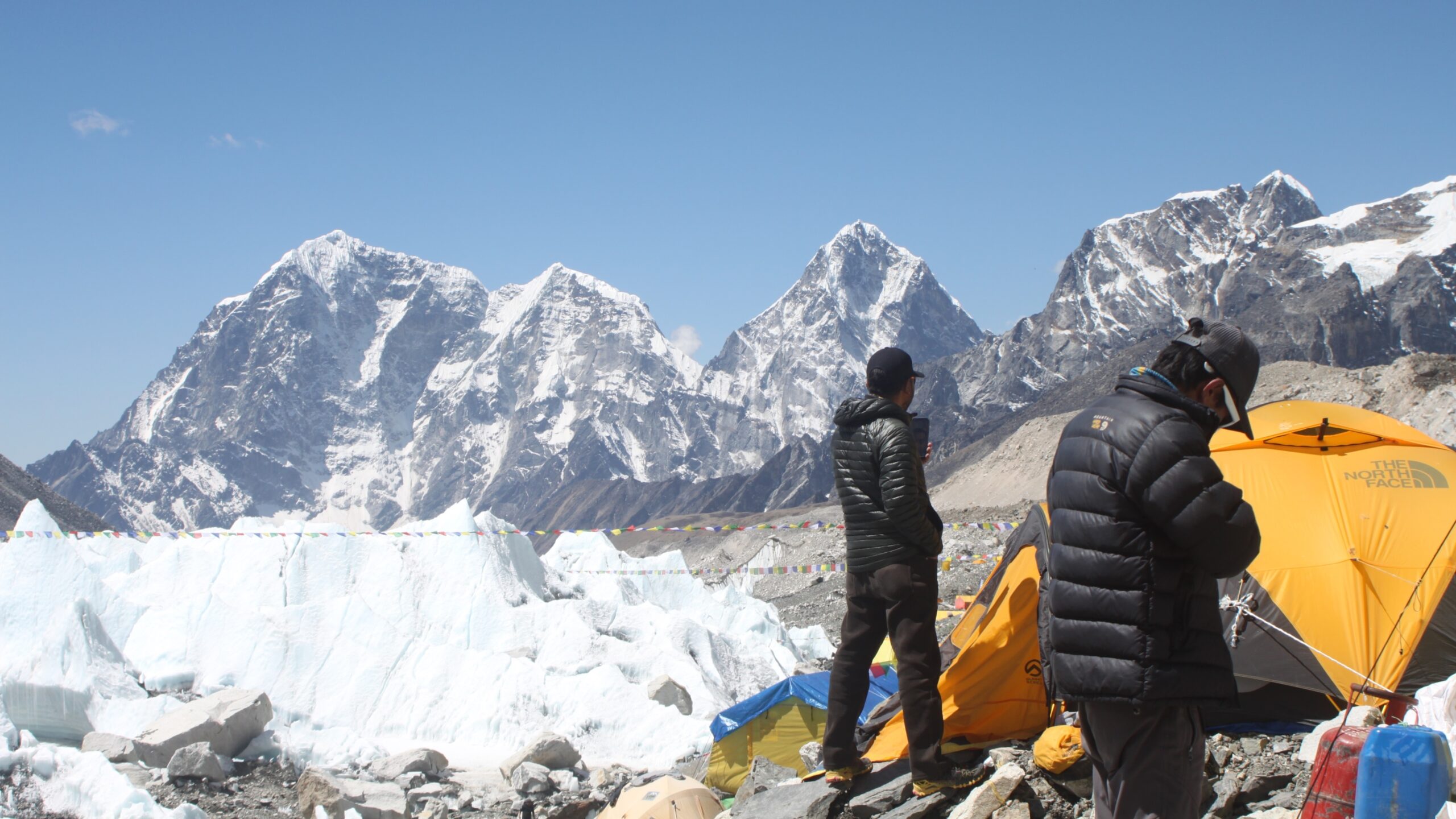
Mount Nuptse 7855 meter is the neighboring peak of Mount Everest share the glory of the Everest Massif and is the southern border of the Western from Thenboche it appears as a huge wall guard the approach to Everest and joined to Lhotse. Its steep west-face drops down more than 2400m to the Khumbu-Ice glacier. One of the interesting features of this mountain is that its south face is 2500m. High and five kilometers wide, the main summit was summited in 1961 as recorded.

Trip Facts

Mountain: Nuptse (7,855 m / 25,771 ft)
Region: Khumbu (Everest Region)
Duration: 40 Days
Base Camp Altitude: Approx. 5,300 m
Maximum Altitude: 7,855 m (Summit)
Grade: Highly Technical & Challenging
Climbing Style: Expedition (Fixed ropes & high camps)
Accommodation: Lodge during trek; Camping at Base Camp & higher camps
Best Season: Spring (April–May) & Autumn (Sept–Oct)
Permits Required: Climbing Permit, Sagarmatha National Park Entry, Khumbu Municipality Permit
Access: Flight Kathmandu – Lukla

Itinerary

Day 1

Arrival in Kathmandu (1,340 m)
Upon arrival in Kathmandu, our team welcomes you and transfers you to your hotel. Expedition briefing and equipment overview in the evening.

Day 2

Expedition Preparation
A full day for final gear checks, documentation, and preparation. You may explore the vibrant streets of Thamel while our staff arranges permits and logistics.

Day 3

Official Briefing
Attend the mandatory expedition briefing at the Ministry of Tourism. Final packing and preparation for the mountain journey.

Day 4

Fly to Lukla & Trek to Phakding
A scenic mountain flight brings you to Lukla (2,860 m). Begin trekking through Sherpa villages to Phakding, following the Dudh Koshi River.

Day 5

Trek to Namche Bazaar
Cross suspension bridges and enter Sagarmatha National Park before ascending to Namche Bazaar (3,440 m), the bustling Sherpa capital.

Day 6

Acclimatization in Namche
Rest and acclimatization day. Optional hike to the Everest View area for panoramic views of Mount Everest, Lhotse, and surrounding Himalayan giants.

Day 7

Namche to Thyangboche
Trek along scenic ridges to Thyangboche (3,860 m), home to the famous monastery with stunning Himalayan backdrops.

Day 8

Thyangboche to Pheriche
Descend through forests and ascend gradually into alpine terrain toward Pheriche (4,240 m), surrounded by towering peaks.

Day 9

Pheriche to Lobuche
A steady climb through glacial moraine landscapes leads to Lobuche (4,910 m), with dramatic views of the Everest massif.

Day 10

Lobuche to Nuptse Base Camp
Trek off the main Everest Base Camp trail toward Nuptse Base Camp (~5,300 m). Set up camp beneath the towering south face of Nuptse.

Day 11 - 32

Climbing Period
Establish higher camps and rotate for acclimatization. The route involves steep snow slopes, ice walls, and mixed terrain. Summit push is planned during a favorable weather window.

Day 33

Base Camp Cleaning
Dismantle camps and ensure the area is left clean following expedition environmental protocols.

Day 34

Base Camp to Pheriche
Begin descent, retracing the route to Pheriche.

Day 35

Pheriche to Thyangboche
Continue descending through alpine meadows and rhododendron forests.

Day 36

Thyangboche to Jorsalle
Long descent toward the Dudh Koshi River valley.

Day 37

Jorsalle to Lukla
Final trekking day back to Lukla. Celebration dinner with the crew.

Day 38

Fly to Kathmandu
Scenic flight back to Kathmandu and transfer to hotel.

Day 39

Free Day in Kathmandu
Leisure day for rest, shopping, or sightseeing.

Day 40

Final Departure
Transfer to the international airport for your onward journey.
Includes:

  • 4 nights hotel in Kathmandu with bed & Breakfast – 3 star hotel
  • Climbing Permit for Nuptse Expedition
  • Food for Trekking and Base camp of Nuptse expedition
  • Staff: 1 trekking & base camp guide, Cook, Cook helper
  • Porter / Yak Lukla to Base camp & Base camp to Lukla
  • Kathmandu -Lukla – Kath. flights with Cargo 40 KG Per person
  • Equipment allowance, daily allowance for Liaison officer, staff
  • Life, Medical & Rescue Insurance for staff & Liaison offer
  • 1 tent for 1 climber north face in base camp
  • Trekking will be Lodge with full board
  • 1 climber = 1 climbing Sherpa guide
  • 2 climber = 1 climbing Sherpa guide
  • climbing food, climbing tent, cooking gas & stove
  • Ice fall charges normal fee and fixed rope
  • 2 bottle oxygen for member & 1 bottle for Sherpa summit day
  • Mattresses, dining tent, Toilet tent, Table and chair for expedition
  • Airport – hotel – airport transfer
  • Welcome dinner

Exclusion:

  • Personal equipment for trekking & climbing
  • Emergency Rescue evacuation incase needed
  • Lunch & dinner in Kathmandu
  • Walkie Talkie permit & Satellite phone permit
  • Bar Bills & beverage
  • Garbage deposit

PREVIOUS EXPERIENCE/FITNESS
The technical difficulty of this climb is not high, but it is physically demanding with long days and sections with a lot of exposure. The trip is ideally suited to strong, experienced climbers who want to climb the peak in its own right, or to use the trip to gain experience for higher peaks in the future. To move efficiently and enjoyably we recommend you have experience of Alpine PD+/AD routes and /or an ability to climb Scottish grade 1/ll winter routes and previous experience of altitude of at least 4800m before.

A TYPICAL TREKKING DAY
Starts around seven am (not a problem as it’s usual to go to bed early!) with you packing your overnight gear into a kit bag before enjoying a hearty breakfast ready to leave camp whilst it’s still fairly cool. The pace on the trek will be leisurely with plenty of time to enjoy the scenery, take photos, chat to the locals and keep hydrated. Lunch is usually in a fine spot by the side of the trail and, most days, you will be arriving at our overnight camp mid afternoon ready for a well earned cup of tea. This leaves an hour or so to rest or explore before a three course evening meal. It is quite remarkable what the locals can produce in these remote circumstances.

WEATHER CONDITIONS
The Post and Pre monsoon conditions experienced from October into mid-December. April-May are usually very fair, dry and stable. Daytime temperatures are pleasantly warm in the valleys (20-30C) whilst cool to very cold (especially with wind chill) high on Baruntse. Night time temperatures are cold to very cold (possibly as low as minus 30C) and you should make sure you have a very warm sleeping bag (-30c), an expedition weight down jacket and good quality down mitts.

CATERING ARRANGEMENTS
Food on the trek and at Base Camp is excellent and designed to stimulate your appetite despite frequent altitude induced loss of appetite. Breakfast includes porridge and cereal followed by eggs (fried, boiled poached or omelettes) and either bread or chapattis with jam, honey, peanut butter etc. Lunch starts with juice and may include chips, rice, lentils, vegetables, salad, sandwiches, beans, tinned fish and tinned meat. Dessert is usually fresh/tinned fruit and tea. The evening meal always starts with soup (often with a healthy dose of garlic to aid acclimatisation) accompanied by poppadums, popcorn or prawn crackers. The main meal varies from local style – Dal Bhat (rice and lentils with an onion and vegetable sauce), Yak stew, momos etc. to western style – yak burgers, chips, pasta, even pizza! Desserts are equally appealing and include apple pie, cake, custard etc. You will not be hungry! Once on the mountain we use dehydrated meals supplemented by chocolate, muesli bars, cheese, nuts, salami, etc.

IMPORTANT – The small print
Please note, flights to and from Lukla can be delayed due to the weather. Please be patient and bring a good book to read. If the flight is delayed overnight accommodation is included on a B&B basis. In cases of longer delays, optional helicopter flights are sometimes offered at an extra cost.

MISSED INTERNATIONAL FLIGHTS
We allow one extra day in the itinerary for bad weather. If you are delayed longer (unusual) we can re-book your International flight but additional costs may/will be incurred. Tickets can be changed according to availability and the class of ticket, you may need to upgrade and be flexible on your return date. All additional payment would need to paid for in Kathmandu (card payments accepted).

RESPONSIBLE TOURISM
We employ local staff to work alongside our own group leader giving employment beyond farming. We ask that you restrict showers to those lodges that have electricity or solar power, thus reducing deforestation. Be prepared to wash using bowls of warm water or ‘wet ones’. We recommend you dispose of burnable rubbish at the lodges but take other items such as bottles and batteries back to Kathmandu. Avoid plastic bottles of water by bringing iodine tablets and a refillable bottle to drink local pumped water. Soft drinks should be purchased in glass bottles that can be recycled.

ALTITUDE
Our itineraries generally allow sufficient time for your body to acclimatise. The best way to avoid any problems is to do everything slowly, walk at a gentle steady pace and drink plenty of fluid. Our leader will give an appropriate briefing on arrival.

USEFUL TIPS
Just in case your main luggage goes missing en route, it is a good idea to wear your boots on the plane. Most other things can be replaced but comfortable, well worn-in boots are more difficult to replace easily.

EQUIPMENT
A detailed equipment list is provided on booking. Specialist items such as sleeping bags and down jackets can be hired or purchased.

BAGGAGE
For your own comfort travel light. Normally airlines restrict baggage to 20kg and the Lukla flight 15kg, but you will be wearing boots and one set of trekking clothes. Some items can be left at the hotel for your return.

VISAS AND PERMITS
US/UK citizens and most EU nationals can purchase Visas on arrival. All other countries should check with their local embassy. Passports must be valid for at least six months after the end date of the trip.

LOCAL COSTS
Most meals are inclusive, please see the key above. Individuals are responsible for drinks throughout and hotel meals which gives the flexibility to choose where you eat.

CURRENCY
Nepalese Rupee. UK Sterling, Euros and US Dollars can easily be changed in Kathmandu. ATM (cash machines) are available in Kathmandu.

TIPPING
Tipping is generally expected and part of everyday life. We generally tip our own local staff as a whole. It is also usual to put approximately 1000 rupees into the pot for the Puja or mountain blessing – a very important part of Himalayan climbing.

EXTENSIONS

Everest Flight
An early morning spectacular flight over Everest.

Chitwan Wildlife Safari (plus 4 days)
You can round off your trek with a three day wildlife safari. This includes a jeep safari, jungle walk, river canoe trip and elephant ride combined with a cultural program in search of rhino and the famous Bengal tiger.